O. P. Sharma: A Life Devoted to Light, Memory and Photography
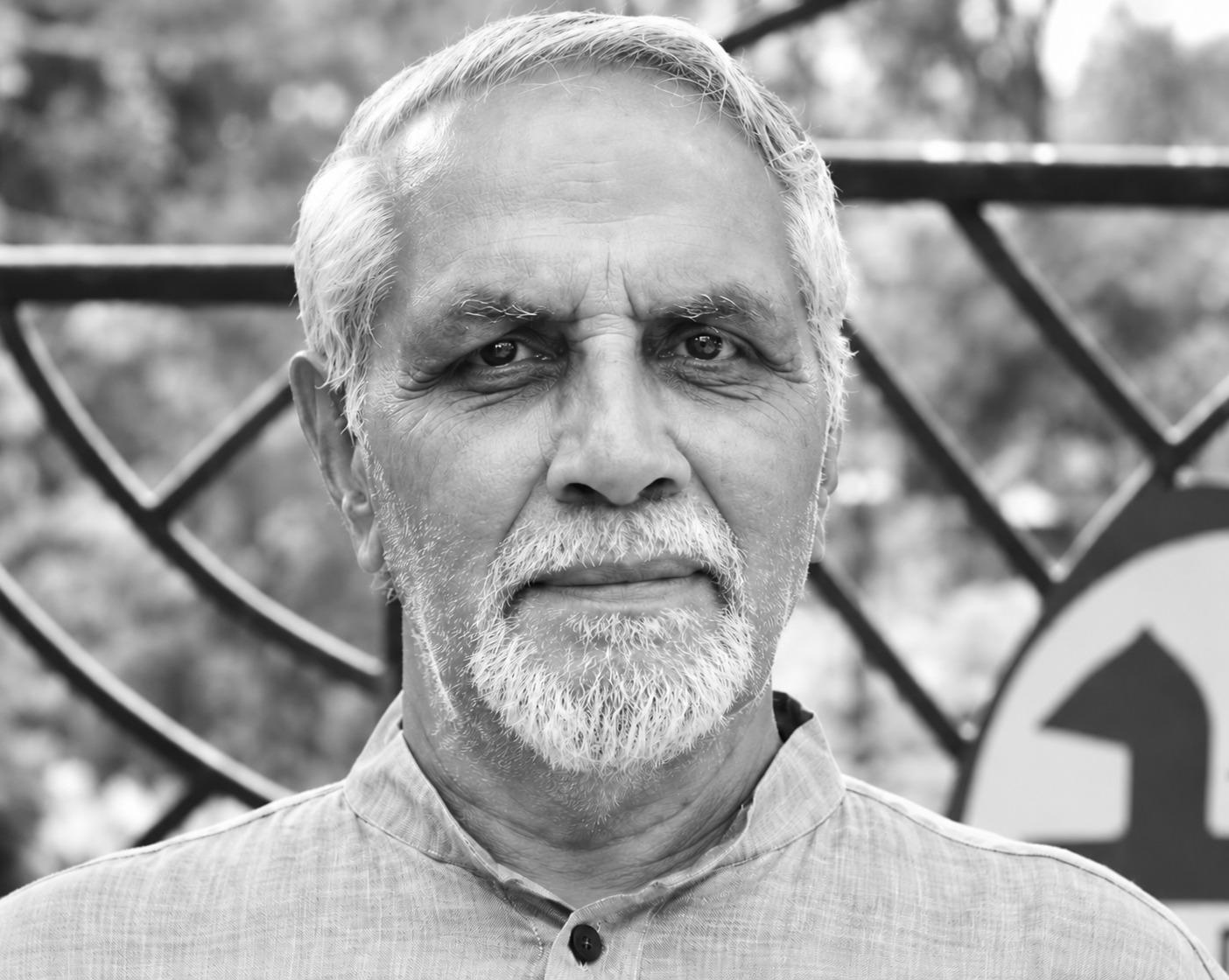
The Rameshwar Prem Foundation pays tribute to O. P. Sharma (1937–2026), a pioneering Indian photographer, educator and champion of photographic art. His experimental darkroom practice, portraits of cultural luminaries and instrumental role in establishing World Photography Day have left an enduring legacy in India's photographic history.
# O. P. Sharma: A Life Devoted to Light, Memory and Photography
**TRPF NEWS | TRIBUTE | 8 November 2026**
*Remembering Om Prakash Sharma (1937–2026), a pioneering Indian photographer, educator and institution-builder whose lifelong commitment to photographic art helped shape the visual culture of post-Independence India.*
The history of Indian photography is shaped not only by those who documented the nation and its people, but also by artists who explored the camera as an independent instrument of imagination. Among these figures, Om Prakash Sharma, widely known as O. P. Sharma, occupies a significant place.
Born in Agra in 1937, Sharma emerged as one of India's distinguished practitioners of analogue photography, developing a body of work that brought together artistic experimentation, technical precision and an extraordinary sensitivity to light.
His career, extending over six decades, represents an important chapter in the evolution of photography as a recognised artistic discipline in India.
As a photographer, teacher, experimenter and cultural organiser, Sharma contributed not only through the images he created but also through the institutions, educational initiatives and photographic communities he helped develop.
His legacy belongs equally to the history of Indian modern art and to the wider cultural history of the country.
## The Beginning of a Photographic Journey
Sharma's early artistic interests developed during his years in Lucknow, where he studied science and became increasingly fascinated by the expressive possibilities of photography.
His encounter with the portraits of the celebrated Armenian-Canadian photographer Yousuf Karsh proved particularly influential.
Karsh's ability to reveal the psychological presence of his subjects demonstrated that photography could extend beyond surface likeness and become a powerful form of artistic interpretation.
Sharma's interest in photographic chemistry and printing led him towards the darkroom, where he began experimenting with the relationship between light-sensitive materials, chemical processes and visual form.
In 1958, he moved to Delhi and began teaching photography at Modern School, Barakhamba Road.
This association continued for more than four decades and became an important foundation for his educational and artistic activities.
At a time when photography in India was often associated with commercial studios, journalism and documentation, Sharma advocated its recognition as a creative discipline possessing its own aesthetic vocabulary.
## The Darkroom as a Space of Artistic Discovery
For O. P. Sharma, the photograph was not simply an image captured by the camera. It was an artistic construction shaped through observation, experimentation and technical intervention.
His darkroom became a laboratory of visual possibilities.
Working with traditional silver gelatin prints, photograms, solarisation, multiple exposures, composite printing and photographic montage, Sharma explored techniques that transformed familiar subjects into unexpected visual experiences.
His compositions frequently moved between representation and abstraction, revealing complex relationships between human figures, architectural forms, textures and geometric patterns.
The photograph, in his practice, was not restricted to documenting external reality. It could also suggest psychological states, altered perceptions and imagined spaces.
This experimentation positioned Sharma within the development of post-Independence Indian Pictorialism, while also connecting his practice with broader conversations about photographic modernism.
His work challenged the assumption that photography was primarily a reproductive medium, demonstrating instead its capacity for artistic invention.
## Portraiture and the Cultural Memory of India
Among Sharma's most valuable contributions was his extensive engagement with portrait photography.
His camera encountered many of the significant personalities who shaped India's artistic, literary and musical culture during the twentieth century.
His subjects included Begum Akhtar, Ustad Bade Ghulam Ali Khan, Pandit Ravi Shankar, Gangubai Hangal, Faiz Ahmed Faiz, Sumitranandan Pant and S. H. Vatsyayan 'Agyeya', among others.
These portraits remain important not simply because of the personalities they represent, but because of their artistic interpretation.
Sharma's sensitivity to gesture, expression, atmosphere and light frequently revealed aspects of his subjects that conventional portraits might overlook.
His photograph of Ustad Bade Ghulam Ali Khan, for instance, demonstrates how portraiture and experimental printing could combine to produce an image of remarkable psychological and visual intensity.
His engagement with musicians, writers, performers and artists also reflects the interconnected cultural environment of Delhi during the decades following Independence.
Such photographs form an invaluable visual record of a generation whose artistic contributions helped define modern Indian culture.
The importance of these images therefore extends beyond photographic history.
They are documents of cultural memory.
## Photography, Education and Institution-Building
Sharma understood that the growth of photography as an artistic discipline depended upon education, institutional support and opportunities for creative exchange.
His longstanding teaching career at Modern School introduced generations of students to photographic techniques, composition and darkroom processes.
In 1980, he and his wife, the accomplished artist-photographer Chitrangada Sharma, established a significant educational association with Triveni Kala Sangam in New Delhi, developing its photography programme.
Their work helped make photographic education accessible to aspiring practitioners and encouraged experimentation beyond conventional studio practice.
Sharma also participated actively in photographic organisations and networks, contributing to the growth of photography clubs, exhibitions and collaborative platforms.
He was associated with the development of the India International Photographic Council, established in 1983.
Through these activities, he worked to strengthen photography's institutional presence and foster dialogue among photographers working in different parts of India and internationally.
His educational philosophy recognised the importance of both scientific knowledge and aesthetic judgement.
To understand photography, in his view, was to understand light, materials, processes and composition while cultivating the capacity to see beyond appearances.
## O. P. Sharma and World Photography Day
One of Sharma's most widely recognised contributions was his involvement in establishing the international observance of World Photography Day on 19 August.
The date commemorates the public announcement of the daguerreotype photographic process in France in 1839.
In 1988, Sharma began advocating for a day dedicated to celebrating photography and its contribution to human culture.
Through communication with photographic organisations and sustained efforts to promote the idea, he helped establish an observance that began in 1991 and subsequently developed into an international celebration.
World Photography Day has since become an occasion for photographers, institutions, educators and enthusiasts to reflect upon the medium's history, artistic achievements and continuing development.
Sharma's contribution to this initiative reflects his lifelong belief that photography was not merely a technical achievement but an essential part of humanity's cultural and visual heritage.
## Photography and the Moving Image
Sharma's artistic activities were not limited to the photographic studio or exhibition gallery.
Alongside Chitrangada Sharma, he also worked in film-related photography, including still and publicity images associated with Hindi cinema.
His work connected with films such as *Siddhartha* (1972) and *Shalimar* (1978), illustrating his ability to move between different forms of visual expression.
These assignments also reveal the broader cultural environment in which his photographic practice developed, connecting fine-art photography with cinema, theatre, music and public culture.
His interest in the creative possibilities of the photographic image remained consistent across these different fields.
## Rediscovering a Modern Master
A significant reassessment of Sharma's contribution took place in September 2024 through the exhibition *O. P. Sharma & the Fine Art of Photography, 1950s–1990s*, presented at Shridharani Gallery, Triveni Kala Sangam, New Delhi.
Organised by the Alkazi Foundation for the Arts and Art Heritage, the retrospective brought together more than 150 vintage prints from his photographic archive.
The exhibition illuminated the remarkable diversity of Sharma's artistic practice, including portraits, experimental compositions, photograms, montages and other innovative photographic processes.
It also highlighted the often-overlooked history of analogue photographic experimentation in post-Independence India.
Through this retrospective, Sharma's contribution could be examined within a larger cultural and historical framework.
His photographs demonstrated how the development of Indian modernism extended beyond painting, sculpture and architecture into the field of experimental photographic image-making.
The exhibition also reaffirmed the importance of preserving photographic negatives, prints, correspondence, exhibition documents and technical records as essential components of India's artistic heritage.
## A Legacy Beyond the Photograph
O. P. Sharma's contribution to Indian photography cannot be measured solely through individual photographs, exhibitions or professional recognition.
His enduring achievement lies in the cultural environment he helped create.
He encouraged generations of photographers to approach their medium with curiosity, discipline and imagination.
He participated in building institutions that made photographic education more accessible.
He demonstrated that technical experimentation and artistic expression were not competing ideas but complementary aspects of photographic practice.
Most importantly, his work helped establish photography as an independent artistic language capable of interpreting human experience and preserving cultural memory.
The images he created continue to offer important insights into the artistic and intellectual world of twentieth-century India.
His portraits preserve the presence of personalities whose contributions transformed Indian music, literature and visual culture.
His experimental works remind us that photography is not only concerned with recording what exists before the camera, but also with revealing what the artist discovers through the creative act.
## TRPF Remembers O. P. Sharma
The Rameshwar Prem Foundation (TRPF) pays tribute to the distinguished photographer, educator and cultural visionary O. P. Sharma, whose extraordinary dedication helped advance photographic art in India.
His work embodies values that are central to the Foundation's commitment to preserving theatre, literature, visual arts and cultural memory.
Photography has a particularly important role within cultural archives. It preserves fleeting expressions, artistic processes, performances, personalities and environments that might otherwise disappear from public memory.
Sharma recognised this responsibility while expanding the creative possibilities of the photographic medium.
His legacy reminds us that artistic documentation acquires its greatest significance when it becomes accessible to future generations, allowing them to understand the cultural experiences and creative achievements of the past.
In honouring O. P. Sharma, TRPF remembers not only an accomplished photographer but also a dedicated educator and institution-builder who devoted his life to broadening the possibilities of visual expression.
**The photographer may depart, but the light he gathered continues to illuminate the memories of generations.**